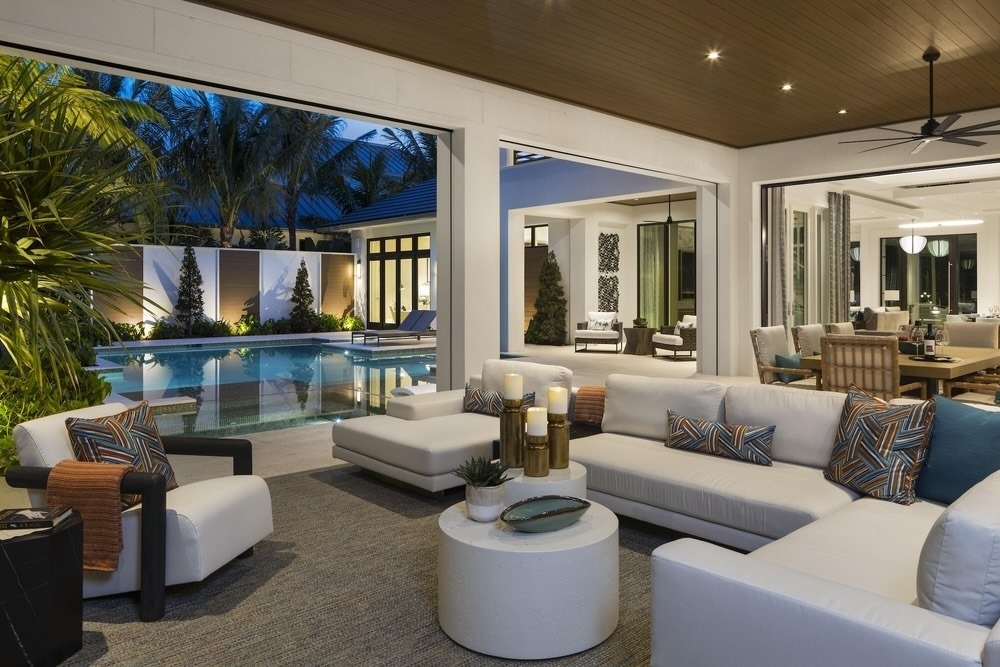
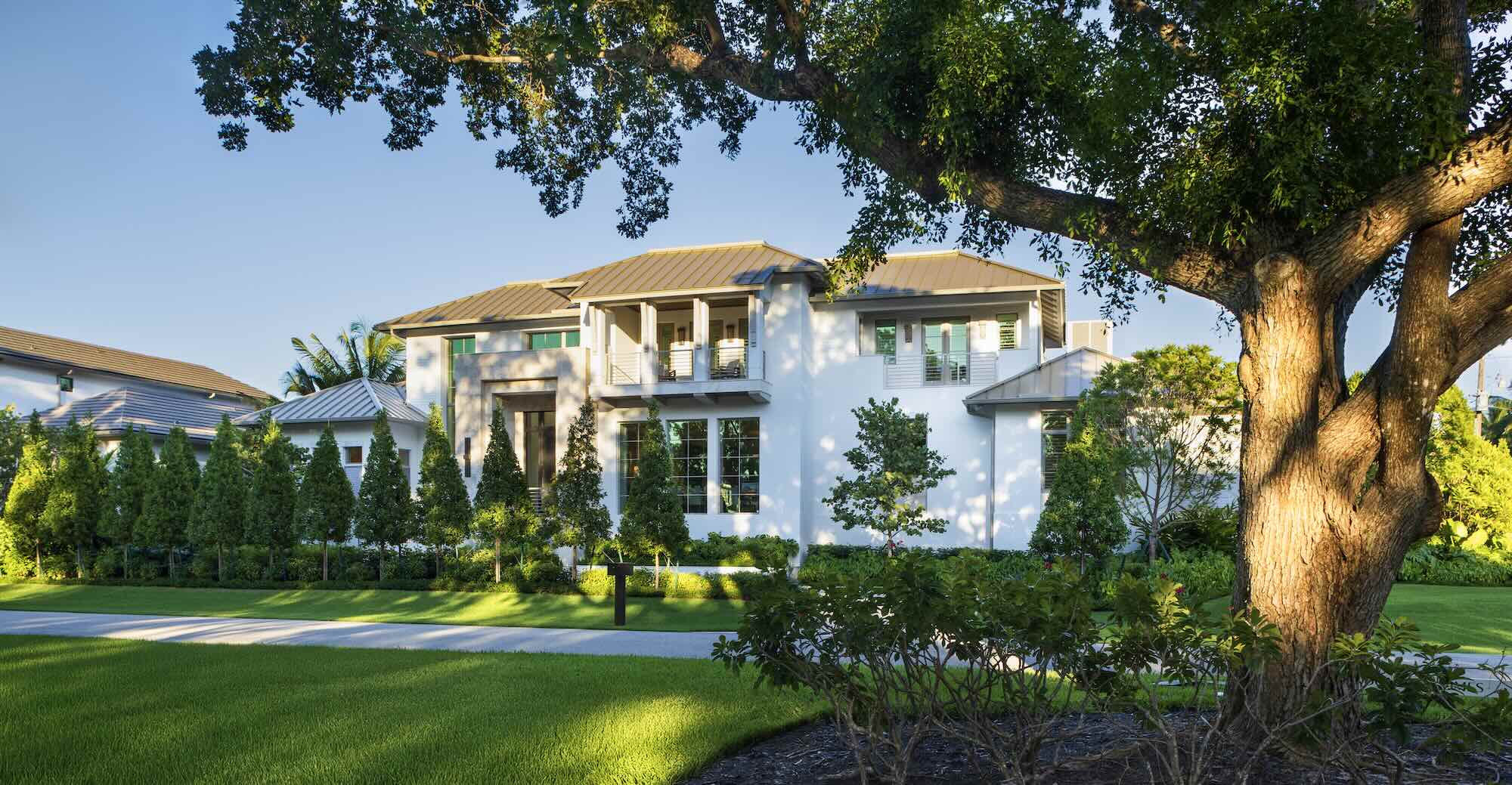
In Florida, some of the most memorable spaces in a home are found just beyond its interior walls.
Planning a luxury residential development requires far more than determining where homes, roads, and amenities will go. It involves understanding the land, the surrounding community, the people who may eventually live there, and how all of those elements can come together to create a distinctive sense of place.
Developers must consider everything from site conditions, infrastructure, architecture, and resiliency to amenities, landscaping, access, privacy, and the long-term evolution of the community. Each decision influences the next, which is why successful developments are typically shaped through an interconnected planning process rather than a series of isolated choices.
What Is Luxury Residential Development Planning?
Luxury residential development planning is the process of transforming a piece of land into a cohesive residential environment designed around a particular location, lifestyle, and long-term vision.
That process can bring together developers, land planners, architects, engineers, landscape architects, builders, interior designers, hospitality experts, environmental consultants, municipalities, and other specialists.
While every project is different, planning typically addresses several fundamental questions:
- What makes this location distinctive?
- Who will want to live here, and how will they want to live?
- What should be preserved or emphasized about the site?
- What types of residences are appropriate?
- How should people move through the community?
- Which amenities genuinely enhance the experience?
- What infrastructure will the development require?
- How can the project respond to local environmental conditions?
- How will the community maintain its appeal over time?
It Starts With Understanding the Land
Before determining what to build, experienced developers first study where they are building.
A waterfront property, golf-oriented community, urban infill site, and expansive inland parcel each present different possibilities and constraints. Topography, water, vegetation, views, access, adjacent properties, existing infrastructure, and environmental conditions can all influence the eventual plan.
The goal is not simply to fit a predetermined development onto the property. Strong planning looks for opportunities inherent in the site itself.
A view corridor might influence how residences are oriented. Existing natural features may become defining parts of the landscape. Waterfront access could shape recreational amenities. The relationship between a property and neighboring destinations may determine where entrances, gathering spaces, or commercial components belong.
By allowing the character of the land to inform the plan, developers can create communities that feel connected to their surroundings rather than imposed upon them.
A Clear Vision Guides the Entire Development
Once the site is understood, the development needs a clear identity.
Luxury does not have one universal definition. For one community, it may mean privacy, large homesites, and understated architecture. For another, it may center on waterfront living, boating, dining, wellness, golf, walkability, or hospitality-inspired services.
The developer must define the experience before designing all of the individual pieces.
That vision can influence:
- The mix and density of residences
- Architectural character
- Community layout
- Amenity programming
- Landscape design
- Transportation and walkability
- Public and private spaces
- Hospitality and service offerings
- Interior and exterior material standards
The strongest vision is specific enough to give the development character while flexible enough to remain relevant as lifestyles and expectations evolve.
Market Understanding Helps Translate Vision Into Real Life
A successful residential development must be inspiring, but it also has to reflect the way people genuinely want to live.
Market research and local knowledge help developers understand what prospective residents value, which housing types are appropriate for the area, and how expectations may be changing.
In the luxury market, that often requires looking beyond basic demographics.
Developers may consider whether future residents are likely to use the home seasonally or year-round, how they entertain, how much privacy they prefer, whether boating or golf is important, how they think about wellness, and what types of services or conveniences would meaningfully improve everyday life.
That insight helps turn broad ideas about "luxury" into decisions that serve real needs.
Master Planning Connects Everything
Master planning is where the many components of a development begin to function as one place.
Rather than considering residences, streets, landscaping, amenities, and open space separately, master planning examines the relationships between them.
Where do residents arrive?
What do they see first?
Can people move comfortably between their homes and shared amenities?
Where should more active areas be located, and where should the community feel quieter?
How can views be protected or enhanced?
Where should landscape, water, trails, gathering spaces, or natural buffers create transitions?
These decisions can have an enormous effect on daily life.
A well-planned community should feel intuitive to navigate. Privacy should feel natural rather than engineered. Amenities should be convenient without overwhelming nearby residences. Architecture and landscaping should create variety while maintaining a recognizable identity.
These qualities may be subtle, but they are often what distinguish thoughtful master planning from simply arranging buildings on a site.
Infrastructure Has to Support the Vision
Some of the most important elements of a luxury development are also the least visible.
Roadways, utilities, drainage, stormwater management, power, telecommunications, parking, service access, and other infrastructure all have to be considered alongside the more visible elements of the community.
These systems affect not only how the property functions at opening, but how well it performs for decades afterward.
Planning infrastructure early also helps the design team understand where constraints exist and where opportunities may be created.
A beautifully designed development cannot succeed if the underlying systems do not perform at the same level. Luxury therefore depends as much on thoughtful engineering and planning behind the scenes as it does on architecture and finishes residents see every day.
Architecture Should Respond to the Larger Setting
Individual buildings play an important role in establishing the character of a development, but they should not be designed in isolation.
Architectural planning considers how residences relate to streets, landscaping, amenities, neighboring buildings, views, sunlight, and the overall scale of the community.
In a luxury development, the goal is often to achieve both cohesion and individuality.
A strong architectural framework can provide consistency in proportions, materials, landscaping, or design principles without making every residence feel the same. The result is a community with a recognizable visual identity that still feels layered and interesting.
Architecture can also respond directly to the environment. In Southwest Florida, for example, indoor-outdoor connections, shade, natural light, water views, landscaping, and climatic conditions can all influence how residences and shared spaces are conceived.
Amenities Are Planned Around Experiences, Not Checklists
A long list of amenities does not automatically create a better community.
Successful developers ask a different question: How will residents actually spend their time here?
That perspective may lead to a very different amenity plan.
A waterfront community might emphasize access to boating and the water. Another development may center around golf, wellness, dining, nature, or social gathering spaces. In some communities, a network of smaller spaces distributed throughout the property may be more meaningful than one oversized amenity center.
The relationship between amenities matters as well.
Residents should be able to move naturally between home and the places where they exercise, dine, gather, relax, or enjoy the outdoors. Thoughtful placement can help amenities become part of everyday life rather than features residents rarely use.
The objective is not simply to offer more. It is to offer experiences that belong to that particular place.
Landscape and Open Space Shape the Experience
Buildings may define a development visually, but the spaces between them often determine how it feels.
Landscape architecture can shape arrival experiences, establish privacy, frame views, provide shade, soften transitions, create gathering places, and connect people with the natural surroundings.
Open space also gives a community room to breathe.
The best planning considers landscaping and the natural environment from the beginning rather than treating them as finishing touches. Existing vegetation, waterfront edges, preserves, parks, trails, gardens, and other outdoor spaces can become important elements of the community's identity.
In Southwest Florida especially, where the outdoor environment plays such an important role in daily life, these connections can be central to the residential experience.
Resiliency Must Be Part of Planning From the Beginning
Planning a luxury residential development in Southwest Florida also requires careful consideration of the region's environment.
Coastal exposure, heavy rainfall, flooding, severe weather, heat, and long-term maintenance all influence development decisions.
Resiliency may affect site elevation, drainage, landscape choices, infrastructure, material selection, mechanical systems, building design, and the location of critical equipment.
The most effective strategies are integrated early rather than added after the broader design has already been established.
For residents, many of these decisions may never be immediately visible. Their value lies in helping the community perform well over time while protecting the quality of the living experience.
Development Requires Coordination Across Many Disciplines
A large residential development can involve an extensive team of specialists over many years.
Developers may coordinate architects, planners, engineers, contractors, landscape architects, interior designers, environmental specialists, sales teams, hospitality partners, municipalities, operators, and many others.
No individual discipline can make every decision independently.
An architectural decision may affect structural engineering. Infrastructure can influence site planning. Amenity programming may change landscape requirements. Operational considerations can affect layouts long before a building opens.
The developer's role is therefore not only to establish a vision, but also to maintain alignment as the project moves from early concepts through design, approvals, construction, and eventual operation.
That continuity is essential to protecting the original intent.
Phasing Determines How the Community Comes to Life
Many luxury residential developments are built over several years or in multiple phases.
That means developers must think about more than what the finished community will eventually become. They also have to consider how the development will function and feel while it is still being built.
Which infrastructure needs to come first?
When should key amenities open?
How will early residents access their homes comfortably while future phases progress?
How can landscaping and public spaces begin establishing the community's character from the start?
Thoughtful phasing helps each stage feel intentional while allowing the larger vision to unfold over time.
It also requires looking far ahead. Decisions made during the first phase may affect opportunities years later, so planning must balance present-day execution with long-term flexibility.
How London Bay Approaches Luxury Residential Development
London Bay Development Group brings the perspective of a longtime Southwest Florida builder and developer to residential communities and lifestyle destinations throughout the region.
Rather than beginning with a formula, the team looks at the possibilities of each location and the experiences the property can support. Development planning brings together land, architecture, infrastructure, amenities, landscape, partnerships, and long-term stewardship around a unified vision.
That approach can be seen across projects ranging from waterfront residences and master-planned communities to mixed-use coastal destinations.
The objective extends beyond creating new places to live. It is to create places that contribute something meaningful to Southwest Florida and remain desirable for generations.
Frequently Asked Questions About Luxury Residential Development Planning
What goes into planning a luxury residential development?
Planning a luxury residential development typically includes site analysis, market research, master planning, architecture, engineering, infrastructure, landscape design, amenity planning, environmental considerations, resiliency, approvals, construction planning, and long-term community strategy. These elements are coordinated around a shared vision for how residents will experience the community.
What is master planning in residential development?
Master planning determines how the major elements of a development work together, including residences, roads, amenities, landscaping, open spaces, infrastructure, and pedestrian connections. The master plan provides the framework that guides more detailed design and construction decisions.
How long does it take to plan a residential development?
The timeline varies significantly depending on the size, location, complexity, approvals, infrastructure requirements, and number of phases involved. Large luxury developments may require years of planning before the entire community is complete.
Why is the location important when planning a luxury development?
The location influences nearly every aspect of planning, including architecture, views, access, amenities, landscaping, infrastructure, environmental considerations, and the lifestyle the development can support. Strong development planning responds to the characteristics of the site rather than treating every property the same.
What makes luxury residential development different from standard residential development?
Luxury development generally places greater emphasis on site selection, architecture, planning, materials, amenities, privacy, resident experience, service, and long-term design quality. Rather than focusing solely on housing units, luxury development considers the complete environment and lifestyle being created.
Why is resiliency important in Southwest Florida residential development?
Southwest Florida communities must respond to coastal and subtropical conditions including storms, flooding, heavy rainfall, heat, and environmental exposure. Considering resiliency during site, infrastructure, landscape, and building planning can help support the community's durability and long-term performance.
Discover London Bay Development Group
Creating an exceptional residential development begins long before construction. It starts with understanding the land, imagining what the location can become, and bringing the right expertise together to turn that vision into a place people will be proud to call home.
Explore London Bay Development Group's residential communities and lifestyle destinations throughout Southwest Florida and see how thoughtful planning can shape extraordinary places to live.